- Home
- Canvas Guide
Partial Progress - Circles (browser only)
Living Things, Their Habitats & Environment
Objectives
To identify producers and consumers in food chains.
Resources
Cambridge Primary Science Book 4 | Lined paper
Today's Lesson
Main Activity
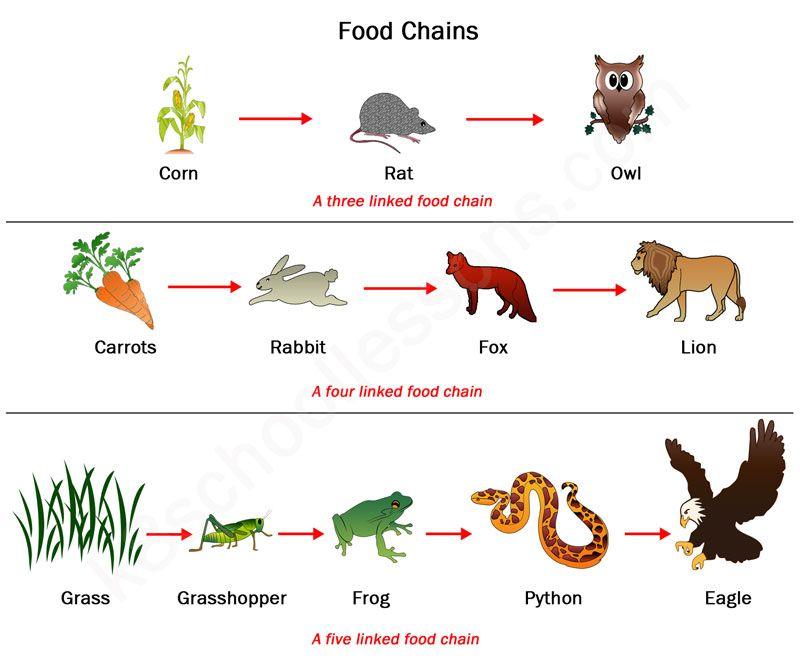
Recap Food Chains, if required, on page 45 in Cambridge Primary Science Book 4.
Recap the previous lesson’s work and choose 10 of your favourite animals. Try to decide are they producer, prey, or predators? Can you include them in a food chain that has a producer at the beginning, prey and predators? Draw or write some food chains to help understand the different parts of the food chain (use the following video to help you if you need to).
Label each part of the food chain. Remember the arrow in the food chain means 'is eaten by'.
Look at the Venus fly trap plant. Having said that plants are always found at the bottom of the food chain, in this case, this plant does not rely on nutrients from the soil alone, but also from insects which they catch and digest. Those insects will have fed on plants to begin with, e.g nectar from flowers, or by eating leaves, so the Venus fly trap is the third organism in this food chain. As a plant, it is also a producer, using energy directly from the sun to convert water and carbon dioxide into sugars. Located in these positions in two different food chains makes it a key species in the habitats in which it is found, deserving of our care and protection.
Watch the Venus Fly Trap video about how the trap works. It is just one of many examples of how organisms sit within complicated food webs:
Assignment
 Please ask your child to complete Assignment 1.